For years I heard about how some cultures are more “collectivistic” than others. A collectivistic culture is a culture that prioritizes the needs, goals, and well-being of the group over individual desires. Oftentimes I would hear about East Asian cultures being more collectivistic, with Western society being more individualistic.
Directionally this always seemed correct, but when you actually try to measure this, you can see that things start to fall apart. Let’s give a few examples:
- “I put the group before myself.”
- “I enjoy cooperating with other people.”
- “Collectivists care more about other people.”
- “Collectivists value harmony.”
These statements sound good on the surface, but are more about “warm fuzzy feelings” and aren’t actually very specific. Are we talking about my family, my coworkers, my parents, my country? Which “others” do collectivists care more about?
Historically surveys of collectivism relied on these types of questions to measure collectivism, and the result has been a confusing mix of answers. The concept of collectivism makes sense, but the way it has been measured never has.
A recent paper published in Nature Human Behavior that I had the privilege of helping with attempts to refine this understanding of societies. This new concept is called responsibilism. My contribution to the project was collecting data from Mongolians (n=194).
Responsibilism emphasizes responsibilities in close relationships. The Responsibilism Collaboration Team (snazzy name right?) collected survey data from 12,247 people in 100 cultures around the world. Instead of asking vague questions about “the group” or “others,” the survey used specific relationships and concrete situations.
Participants were asked to consider questions such as:
- Should we keep our aging parents with us at home?
- How much should we trust or help people we barely know?
- How willing are we to form new relationships with strangers?
The resulting data helps us measure feelings towards duties and responsibilities in close relationships versus generalized warmth toward everyone. A simplified idea is who they feel responsible for. I may feel more responsibility towards my parents, and comparatively less responsibility to a stranger I meet on the street.
Across all cultures surveyed scores were given from 0-100.
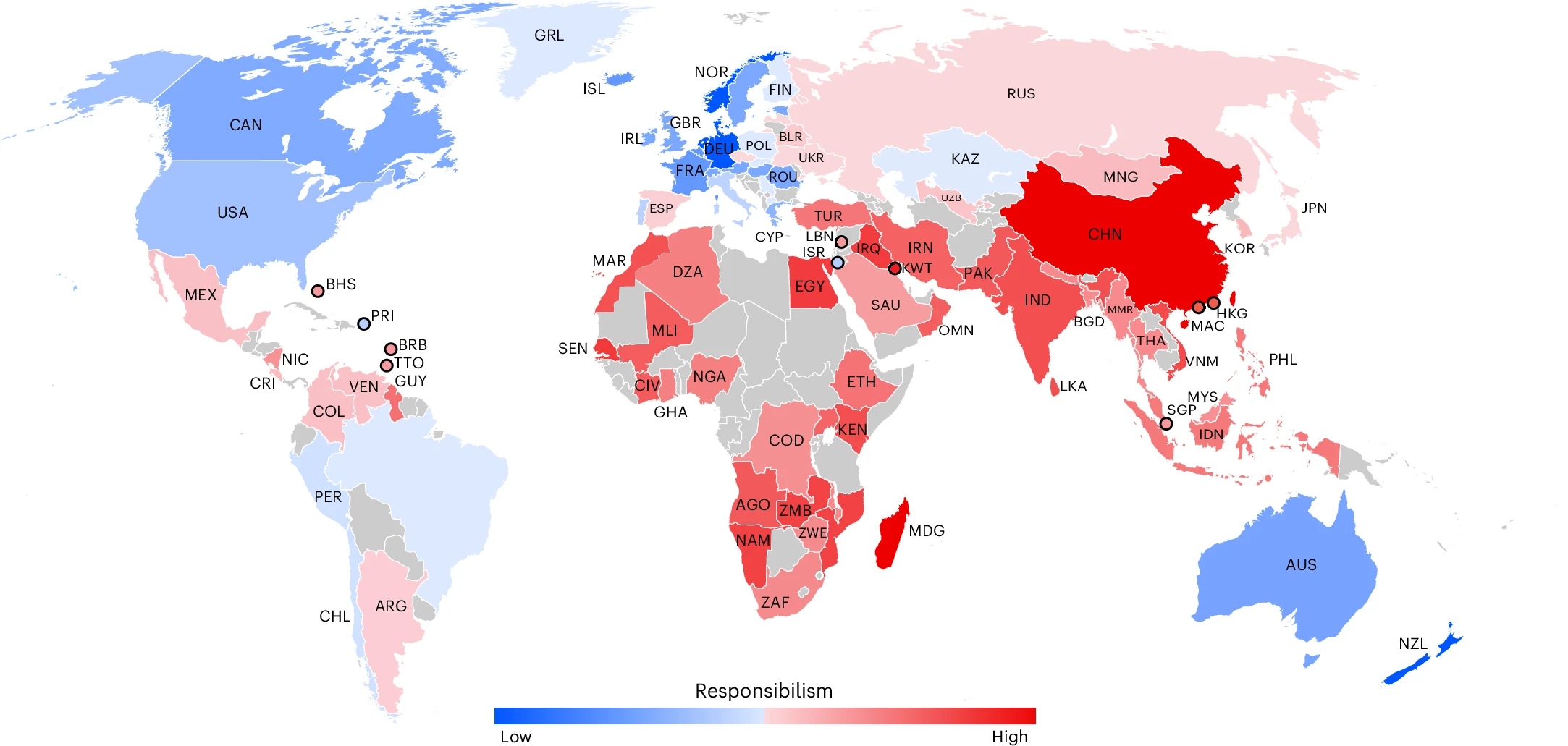
Put simply a higher responsibilism score means stronger felt duties and responsibilities toward people in close relationships. In addition, a higher score is correlated with weaker felt duties and responsibilities at greater social distances.
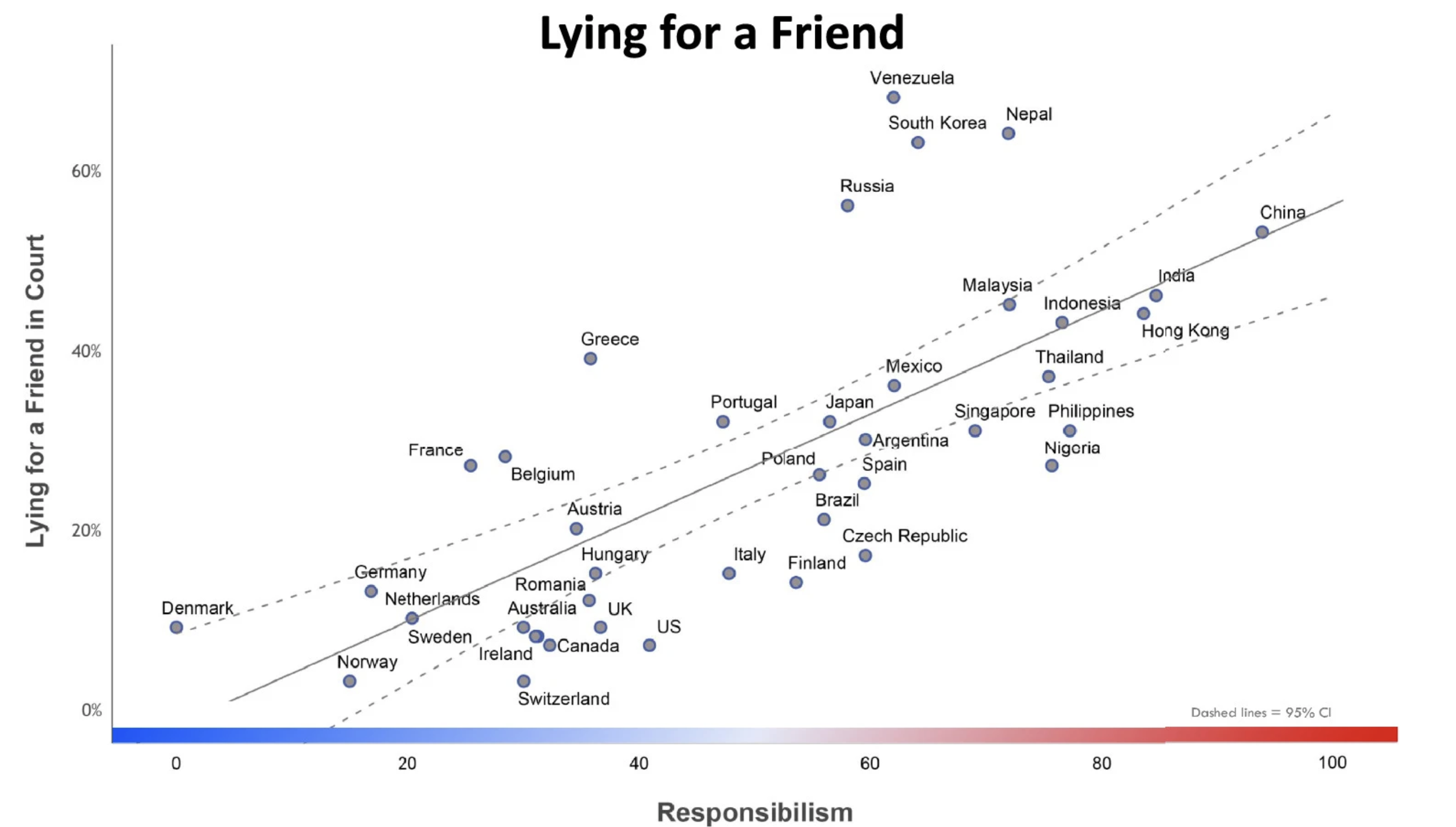
This inverse relationship is shown nicely with these two examples:
Lying for a friend
Returning a lost wallet to a stranger
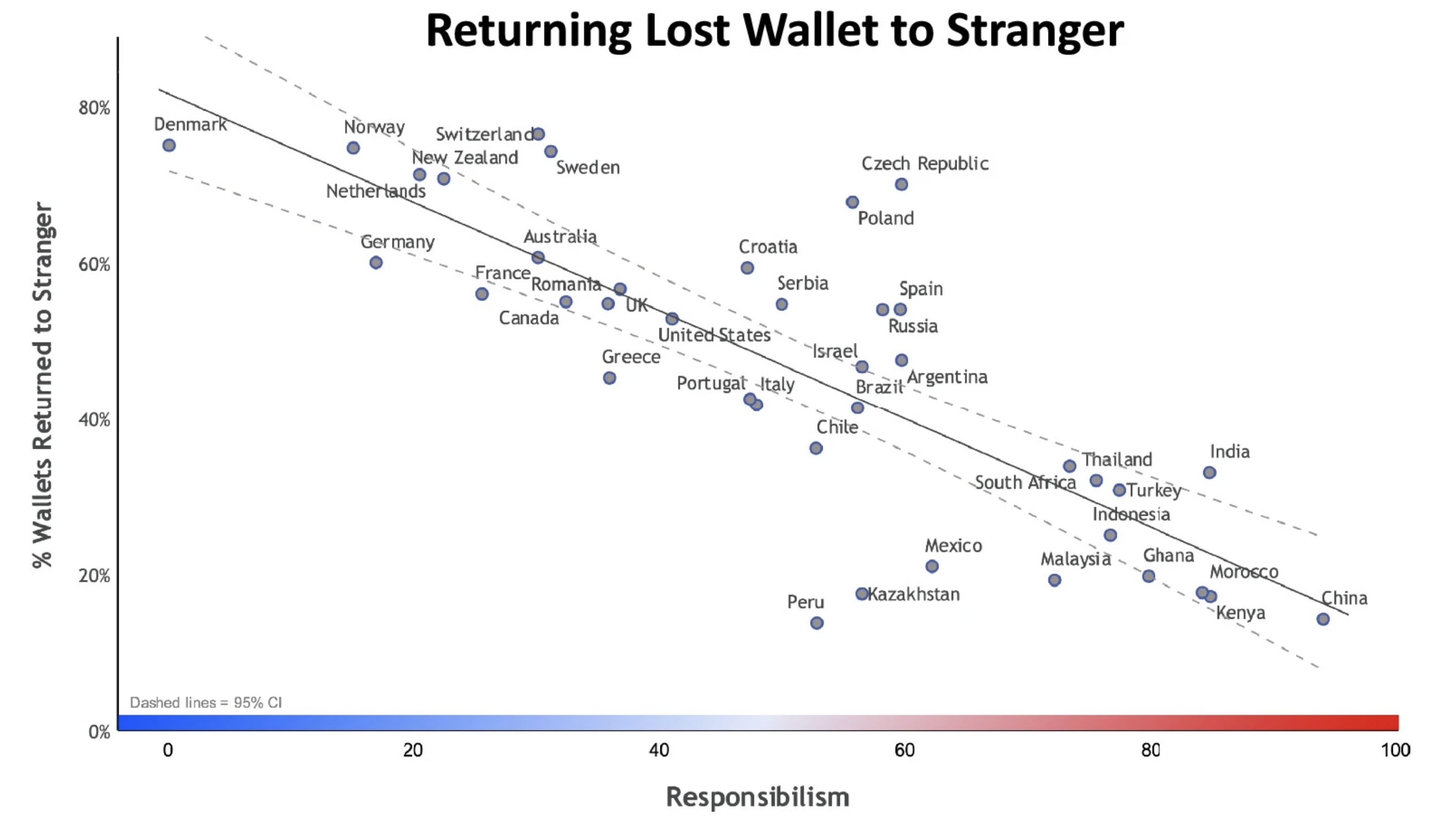
For societies with higher responsiblism, people will do more for those closer to them. Inversely, they will do less for those farther away. Unfortunately Mongolia isn’t listed in the charts above because these questions were asked as part of different studies. The answers were plotted against the responsiblism data, and the correlations are quite strong. This allows us to make some predictions about where Mongolia would end up here.
| Question | Point prediction for Mongolia | 95% prediction range |
|---|---|---|
| Return a lost wallet | ~38% | 13–63% |
| Lie in court for a friend | ~35% | 9–61% |
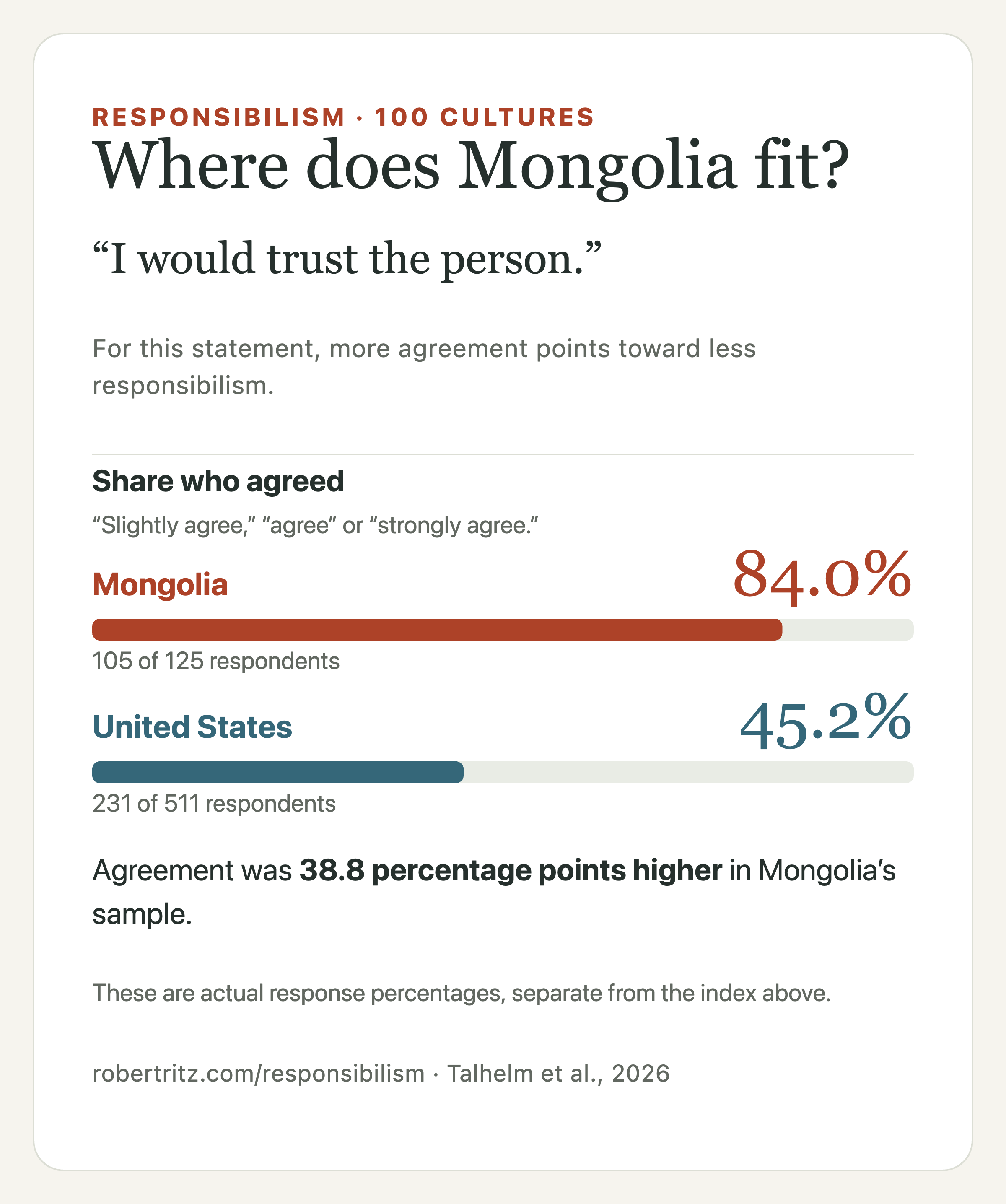
These aren’t exact number obviously, but the trend is quite interesting. I built an explorer to view the data for Mongolia and compare it to other countries. Mongolia is an interesting country because it has elements of both Western “individualism” and Asian “collectivism”.
Here are a few interesting results I found, and where Mongolia differs from the United States.
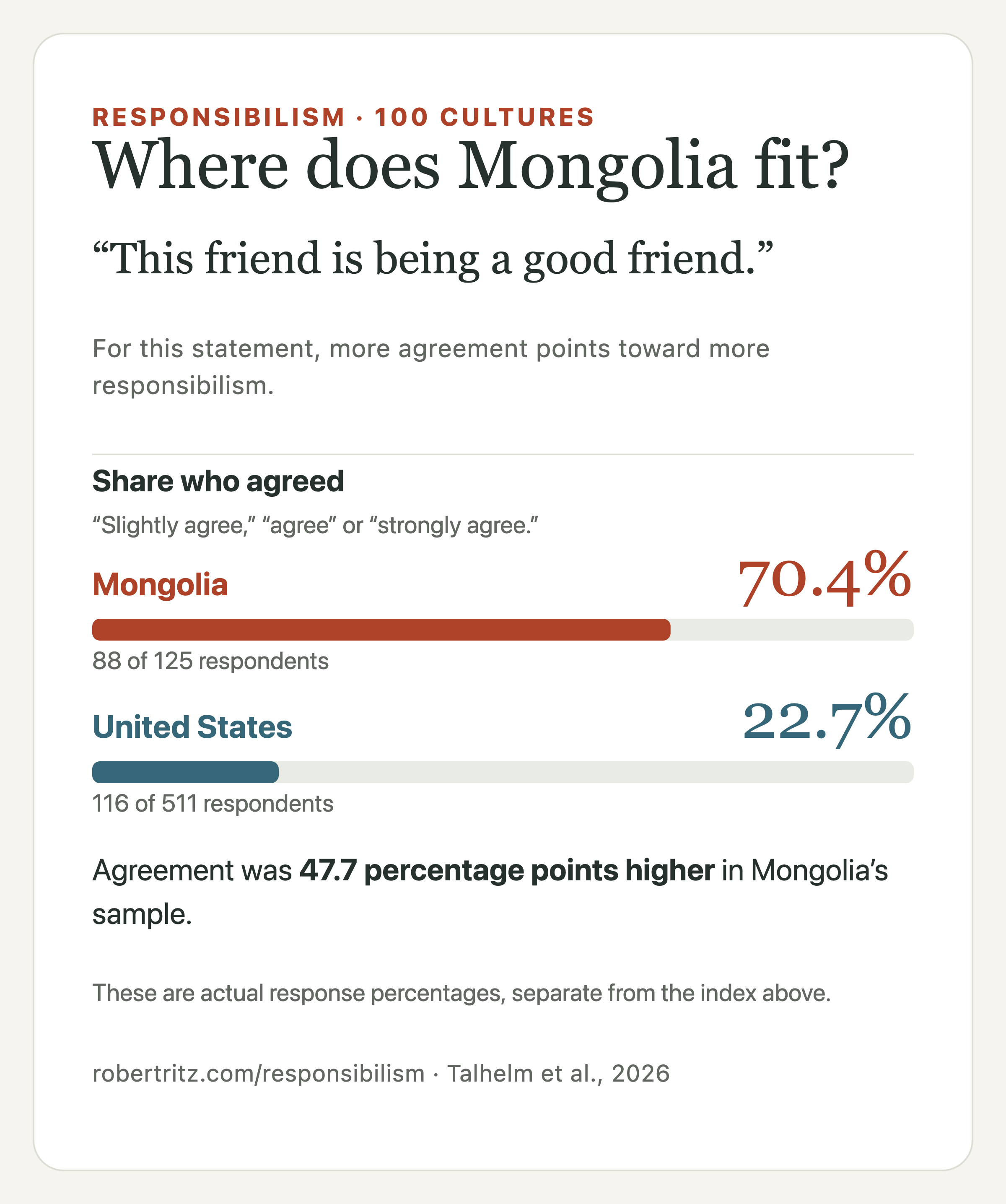
Here a “good” friend can be defined as someone supporting you or as someone who notes that you maybe didn’t do something well.
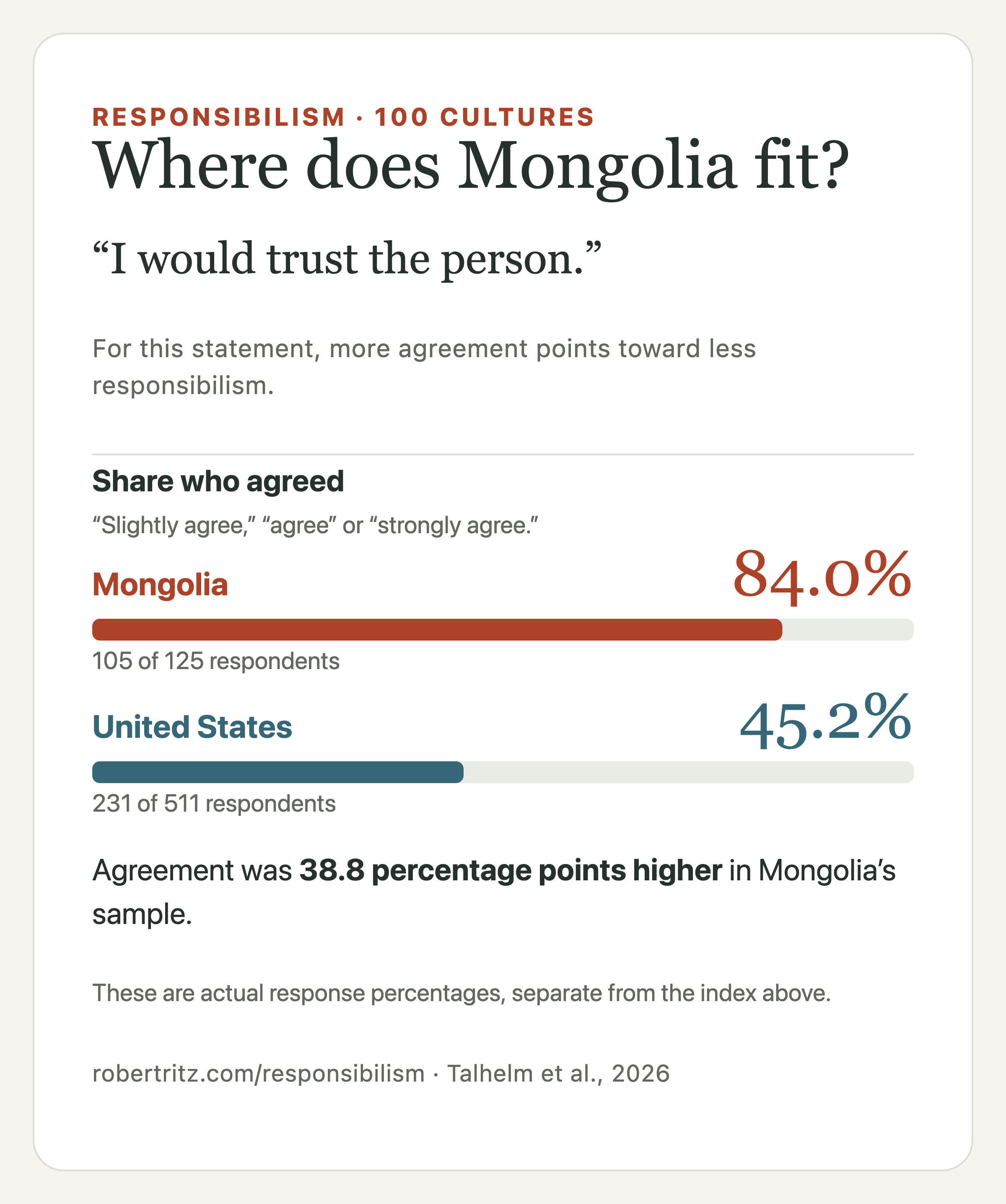
Americans are much less trusting of random people near ATMs.
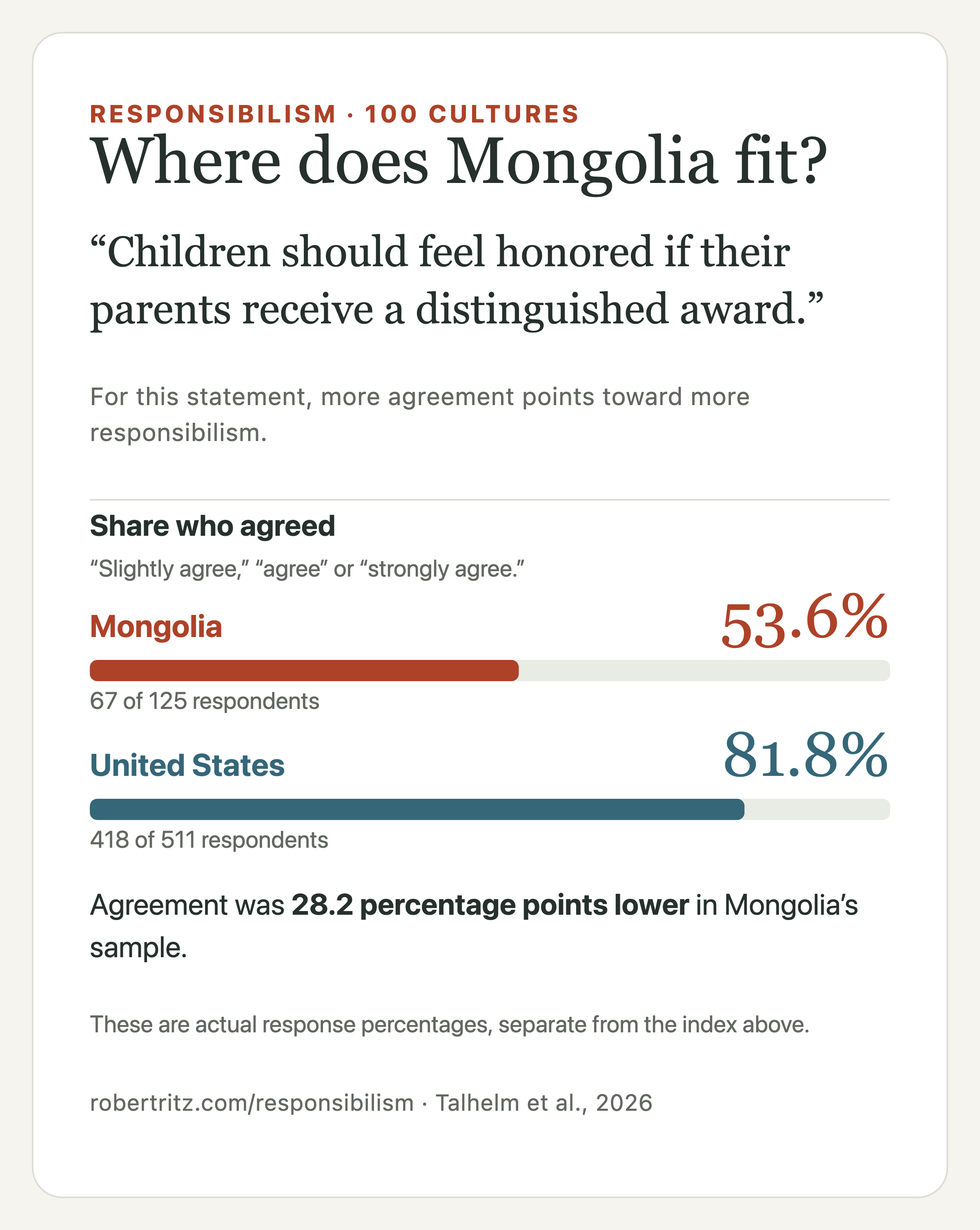
Awards are perhaps less common in the US, and therefore less susceptible to the awardflation that Mongolia suffers from.
If you want to see all the questions and how Mongolia compares, you can access the full explorer here: robertritz.com/responsibilism
However, I think the takeaway is that this research gives us a much more precise way to think about something that “collectivism” only described vaguely. The real question is not whether a society values the group over the individual. It is which people we feel responsible for, how strong those obligations are, and how quickly those obligations weaken as social distance increases.