Last Friday was broken machine day. Two of our six-sided hole machines, used for inserting holes and slots into furniture pieces, broke down.
For the first machine one of the spindles wouldn’t raise or lower. These are controlled electronically from the computer via an pneumatic system. We suspected either a computer issue, electrical, or a solenoid valve which controls the pneumatic air flow.
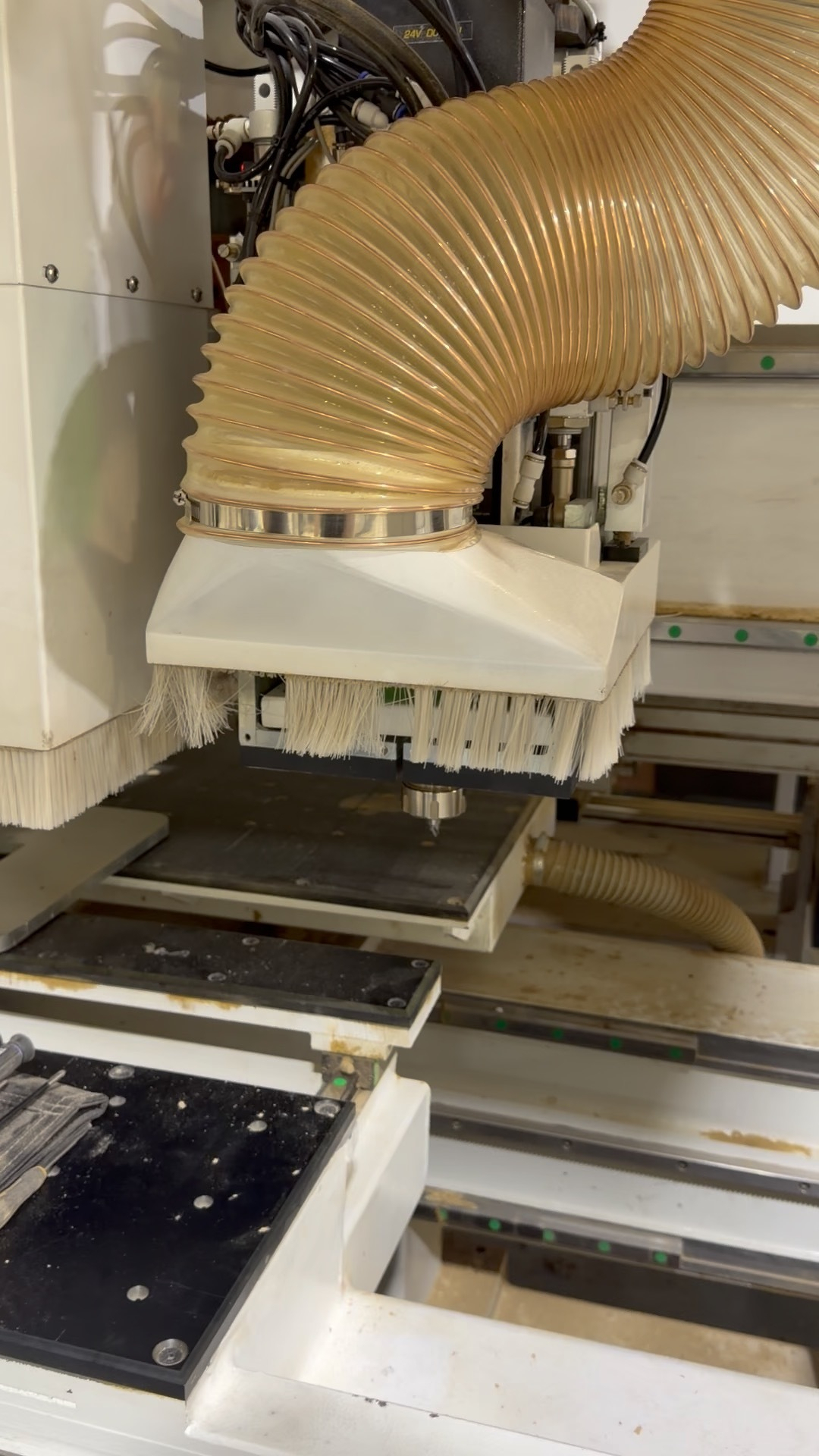 The offending spindle.
After a lot of troubleshooting I was convinced it was the solenoid valve. Our factory manager climbed up and checked on it.
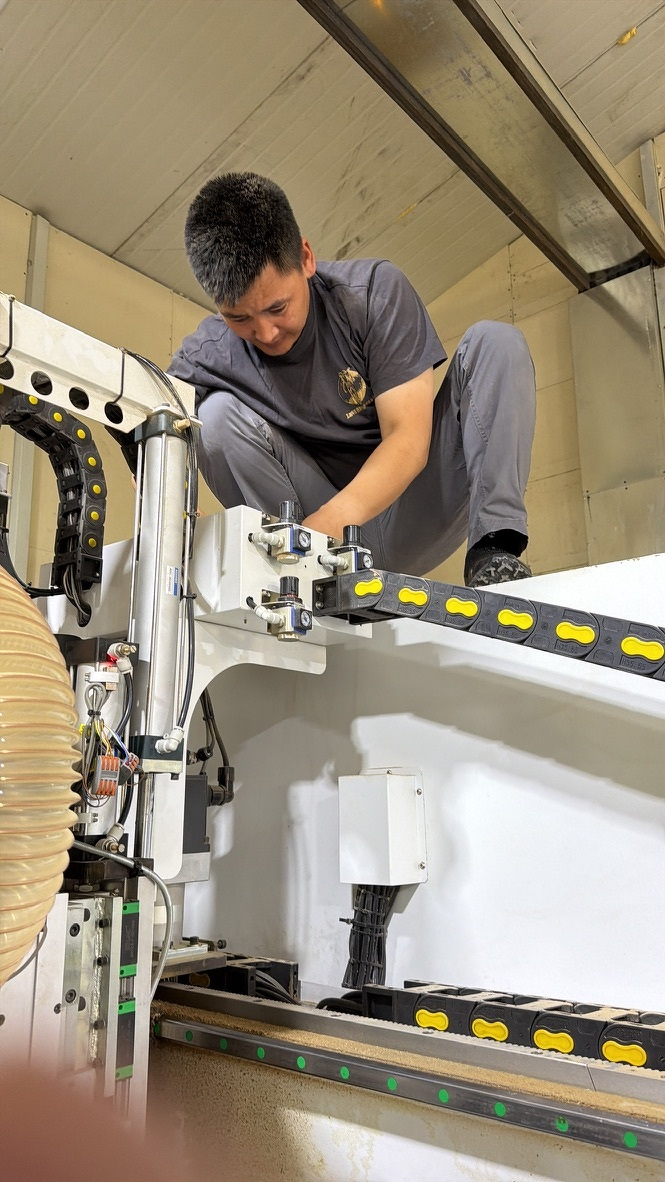
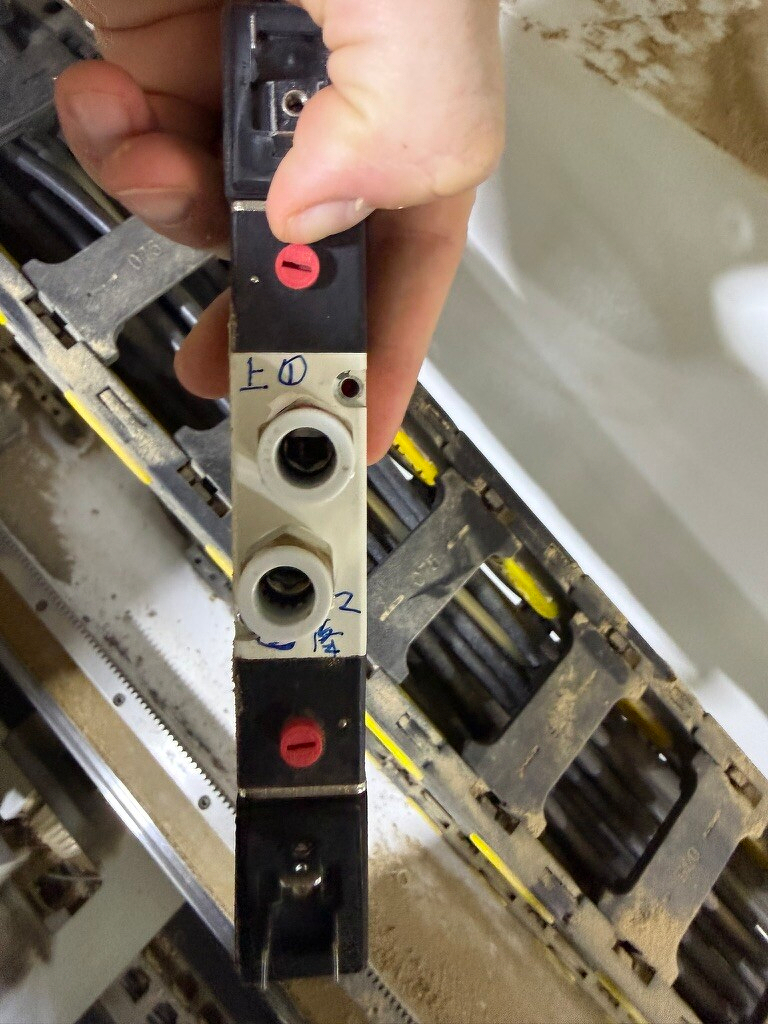
Solenoid valves have these little buttons that allow you to activate them manually. This way you can see if the valve is working without an electrical trigger.
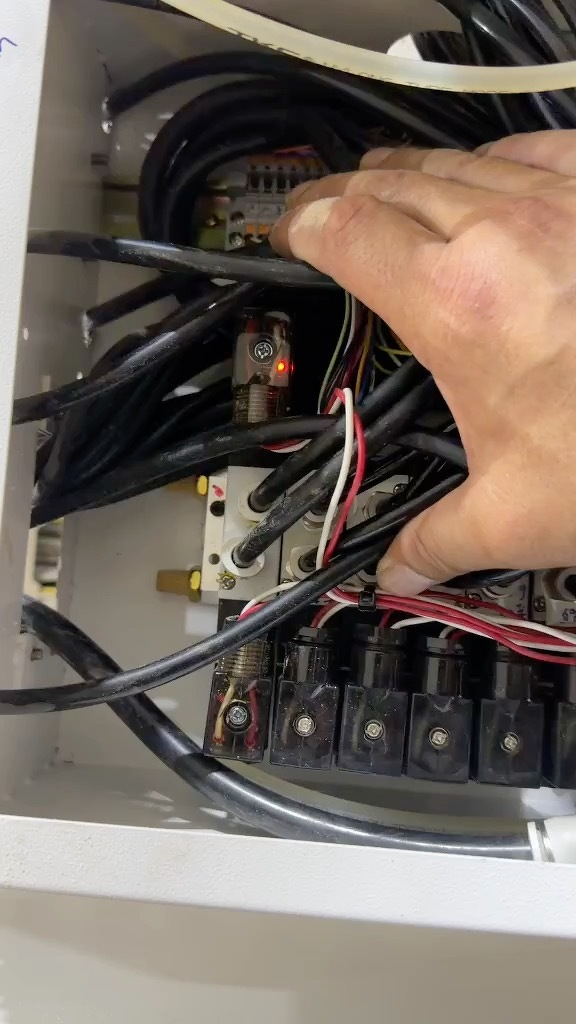
They have these little red LEDs telling you when it is being triggered. This is a “two headed” (no idea if that is what they are actually called) which allows airflow two ways. Often these are just open closed situations but this one allows airflow to move the spindle up, and another to move it down.
The electrical part was working, but the solenoid valve itself was borked. We heard it clicking but no movement.
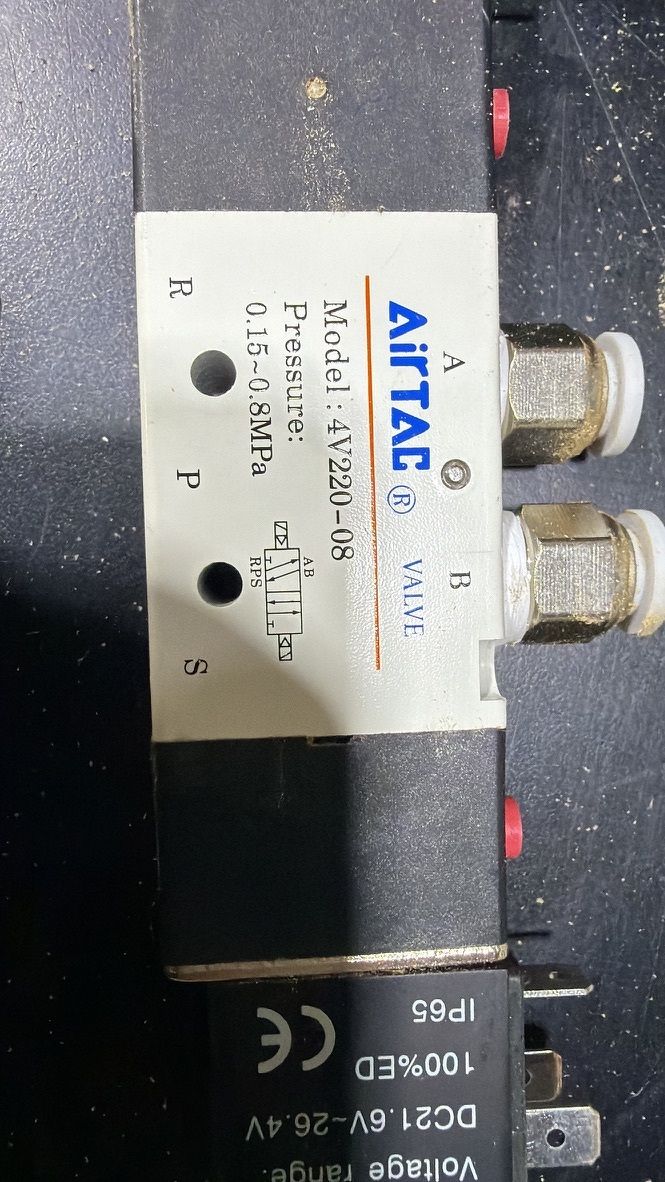
We bought a new one at a local supply store but it was the wrong electrical type! These come in AC or DC varieties. The one we bought was for AC 220V but we needed it to work with DC 20V. Well it turns out we can just take the electrical ends from the broken valve and put it on the new valve. I’m going to research later to see why this is.
Anyways after a few hours we got that fixed. On to the next machine!
The next machine gave an error code, which is usually very helpful. The sensor on the lower spindle wasn’t responding, which usually mean the sensor is broken. These are little sensor that determine if a pneumatic cylinder is in the up or down position (or extended or collapsed depending on the orientation).
We replaced the sensor with a spare we have, but it still didn’t work! So time to trace wires.
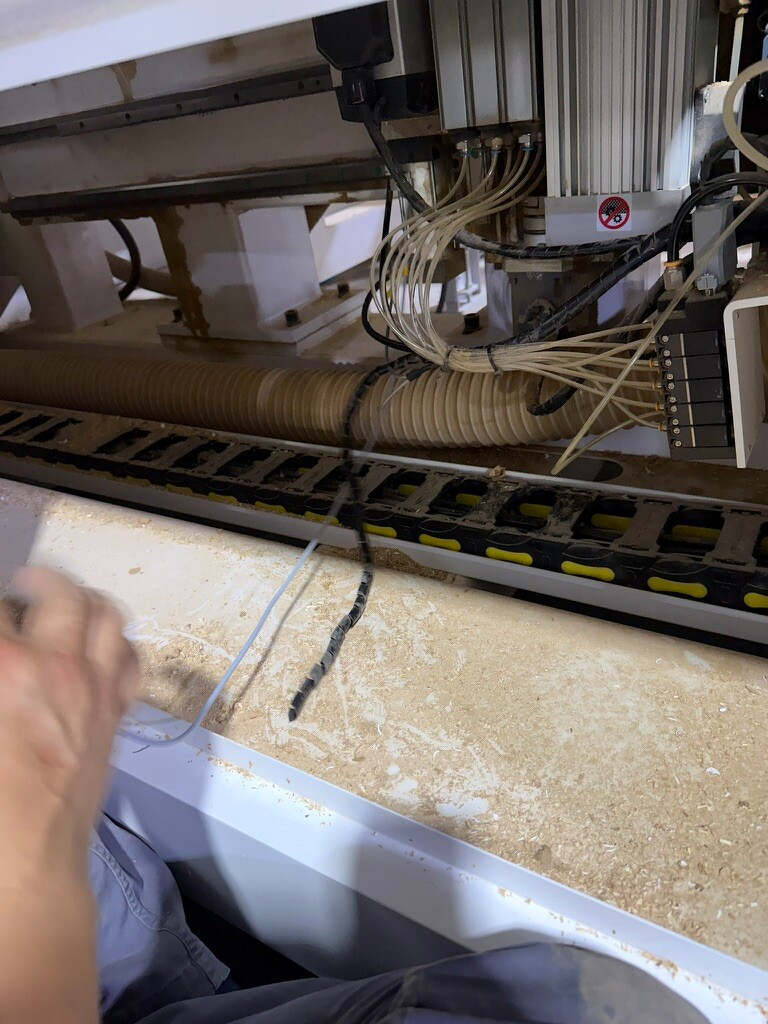
We ended up finding out where one sensor wire was split into two, and one of the connections came off. This was nicely spliced too, but I think wear over repeated use made it come loose. We spliced it again and taped it up. I need to remember to bring my wire shrink insulation to the factory for the future.
Oh well it’s all good now! We’ve gotten quite good at troubleshooting these machines over the past year or so. We keep backup parts because a new part that isn’t available locally (like sensors) would take about 10 days to get here from China.
I’m quite surprised at how the old troubleshooting skills I learned from building PCs back in the day, or by working at an IT outsourcing company nearly 20 years ago helps with this stuff. It’s pretty much all the same.
